
Iran’s Hidden Battlefield: Could Tehran Turn Southern Iraq Into the Next Front?

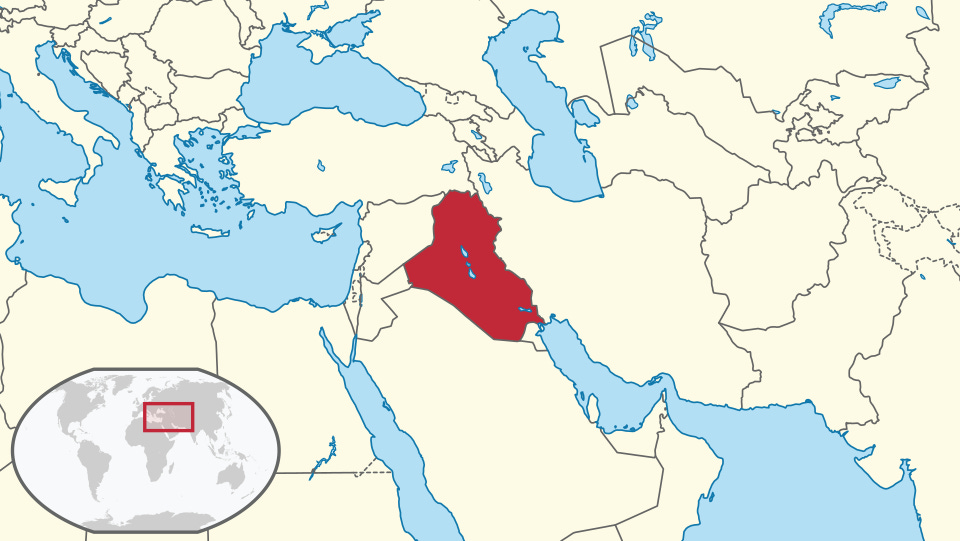
The conventional wisdom about a potential U.S.–Iran confrontation is that the United States possesses overwhelming military superiority, while Iran’s options are limited.
That assessment is broadly correct.
The United States can dominate the air and maritime domains. It can strike Iranian military infrastructure with a level of precision and reach that few nations could replicate. Iran cannot compete with America in a conventional contest.
But focusing only on conventional military power risks missing the way Tehran has fought for decades.
Iran’s greatest weapon has never been its ability to defeat stronger enemies directly.
It is its ability to create complexity.
And if Iran were seeking an asymmetric response to overwhelming American pressure, one of the most important places to watch would not necessarily be the Persian Gulf.
It would be southern Iraq.
The invasion scenario — and why it is unlikely
A direct Iranian invasion of southern Iraq would represent an enormous gamble.
Iran has the manpower. It has a large army. It has combat experience. It shares a long border with Iraq.
But an overt invasion would create significant problems.
Southern Iraq is Arab, not Persian. Iraqi nationalism remains powerful. Even among Shia communities that share religious connections with Iran, an Iranian military occupation would likely generate resistance.
Furthermore, any conventional Iranian advance would expose its forces to precisely the kind of American military superiority Tehran has spent decades trying to avoid.
The United States does not need to occupy Iran to impose devastating costs on Iranian forces.
A conventional invasion would therefore be unlikely.
But there is another possibility.
A hybrid campaign.
Iran’s strategic depth inside Iraq
Unlike many of its adversaries, Iran already possesses influence inside Iraq through a network of political allies, intelligence relationships and armed groups.
The Popular Mobilisation Forces (PMF), or Hashd al-Shaabi, represent a broad coalition of armed factions incorporated into Iraq’s security architecture. Within that structure are several groups with close ideological and operational links to Tehran, including Kata’ib Hezbollah, Asa’ib Ahl al-Haq and elements of the Badr Organisation.
Estimates of PMF strength vary, but the broader umbrella has been assessed at roughly 150,000–200,000 personnel, with the most committed Iran-aligned factions numbering in the tens of thousands.
The significance of these groups is not simply their numbers. It is their ability to operate within Iraq’s political and security environment.
The real Iranian play: create paralysis, not conquest
If Tehran wanted to increase pressure on Washington, it would not necessarily need to send tanks across the border.
It could seek to create conditions in which the Iraqi state itself becomes increasingly unable to manage security in the south.
Southern Iraq is strategically vital.
Basra contains some of the world’s most important oil infrastructure. The region provides access to the Gulf and sits alongside the Shatt al-Arab waterway.
A campaign of disruption could focus on:
political intimidation,
mobilisation of armed supporters,
pressure against Iraqi security institutions,
attacks on critical infrastructure,
creating uncertainty around energy exports.
The objective would not necessarily be territorial conquest.
The objective would be strategic paralysis.
How quickly could instability develop?
Hybrid warfare operates differently from conventional military campaigns.
There may be no obvious invasion day. Instead, instability could emerge through a gradual process:
First, political pressure.
Then, armed mobilisation.
Then, competing claims of authority.
Then, a perception that Baghdad cannot fully control the south.
At that point, Iran could present itself not as an aggressor, but as a power responding to instability. This is a classic feature of grey-zone warfare: creating conditions in which intervention appears defensive rather than offensive.
America’s dilemma
This is where the strategic challenge becomes apparent.
The United States has the military capability to defeat Iranian conventional forces.
But would Washington want to become responsible for another major ground commitment in the Middle East?
The experience of Iraq and Afghanistan remains politically significant. The question would not be whether America could respond. The question would be whether America would accept the long-term costs of restoring stability.
This is the central Iranian calculation.
Tehran does not need to defeat the United States militarily.
It needs to create a situation where the political costs of victory become unacceptable.
The coming contest
The future of any U.S.–Iran confrontation may therefore not be decided by a dramatic naval battle or a conventional invasion. It may be decided in the grey zone.
Iran’s strongest weapon may not be the ability to conquer territory.
It may be the ability to make territory difficult to govern.
The United States has overwhelming military power.
Iran’s strategy has always been to ensure that power cannot easily translate into political success.
And that is why southern Iraq may become one of the most important strategic fault lines in any future confrontation between Washington and Tehran.