
Message to Europe:
Stop attempting to mirror the United States.

The U.S. is a federal republic and ONE country.
The continent of Europe is divided by multiple countries, cultures (including organisational cultures), and languages.
It may share a currency. It might even have a nominal capital in Brussels, but make no mistake, Brussels does not have the same political imprimatur on European countries that Washington has over the American states.
So, without trying to pretend that there’s any real comparison between the U.S. & EU, how does Europe attempt to defend itself, and from whom?
Over a week ago, I was invited to participate in a panel discussion in The Hague at the HCSS - The Hague Centre for Strategic Studies, jointly run by The Aphen Group, in a fireside chat about Upscaling Deterrence. Russia was foremost on people’s minds, as it should be.
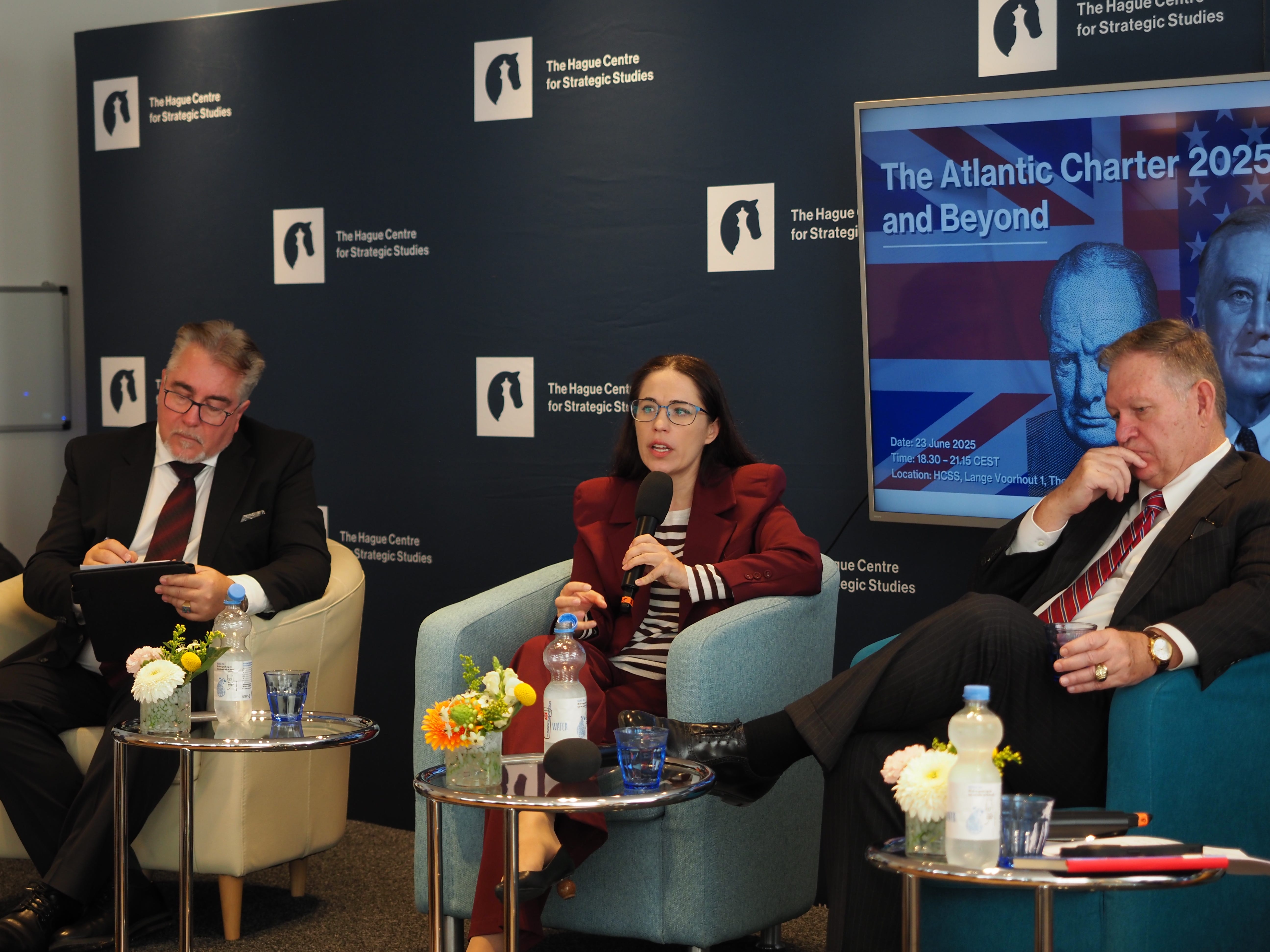
But more importantly, policymakers were exasperated in trying to figure out a way forward. That is, how to fund a remilitarisation of Europe, and would agreed-upon measures be effective?
Having been dependent for so long on the good graces of the U.S., Europe’s 80-year dependency on Pax Americana has robbed the continent of seeing defence from a European perspective.
There was a little optimism, but far too much scepticism was expressed.
Reflecting on my brief time in The Hague and observing the fallout from the NATO Summit this past week, through the fog of jet lag, I suspect that no one believes the promised 5% GDP targets will be reached. That NATO leaders scrambled to answer the challenges posed by Trump, rather than by Vladimir Putin.
Enlarged military budgets, even if they come about, often end up nowhere good if there aren’t any effective strategic plans undergirding them.
European NATO knows only one way to defend itself: by using U.S. military technology, training styles, and doctrine.
However, as the cost of next-generation American weapons increases, they become less affordable for European countries to purchase. Therefore, they can only afford fewer of them in their orders of battle.
At a time when Europe needs to expand the sizes and capabilities of its military forces, this presents a significant dilemma. Buy more American systems at ever-increasing costs, to please the U.S. & its military industrial complex, or attempt some form of military autarky from the U.S.
Politically, the former is easier to accomplish than the latter.
But Ukraine is leading the way in drone warfare. The combined efforts of European intelligence agencies could develop means to counter Russian grey zone threats. Poland is creating its powerful defence industries, which, with the right investments, could help rearm Europe’s eastern flank.
Sweden & France produce ‘European’ fighter planes, not the same technical capabilities as the U.S., but valuable nonetheless, and critically, affordable. The UK & France have nuclear weapons, which could provide the emergent beginnings of a European nuclear deterrent, if meticulously planned. Additionally, Europe can produce armour, missiles, artillery, and artillery shells, which need to be expanded. Importantly, Europe can also produce anti-aircraft systems.
The issue here, of course, is that even were the lofty ambitions of Europe realised, that is, full or even partial autonomy from the Americans, whatever that would be would not match what the Americans have in their arsenal. Is that a bad thing? No. Europe must build with what it has. Dreams of imitating U.S. military technology have to be dropped. There will be no transatlantic parity. However, that doesn’t matter as long as Europe has enough to defend itself from Russian threats, whether conventional or hybrid. It will mean higher defence budgets across the Euro-space, but working within existing means, this doesn’t have to be unrealistically ruinous either. And then there’s that other elephant in the room. What is Europe defending itself against? Now it is Russia, and politically, the mercurial nature of the current U.S. administration. But where does China fit in? Is that a threat to Europe? Does the Indo-Pacific fit into future European objectives? Should Europe develop global power projection? That might be a future topic to address, but between Putin and Trump, there’s enough on European plates to keep leaders busy for some time yet.