
Oil: The Atlantic Basin Buffer
How Brazil, Guyana, and Argentina Are Reshaping Oil Security During the Strait of Hormuz Crisis

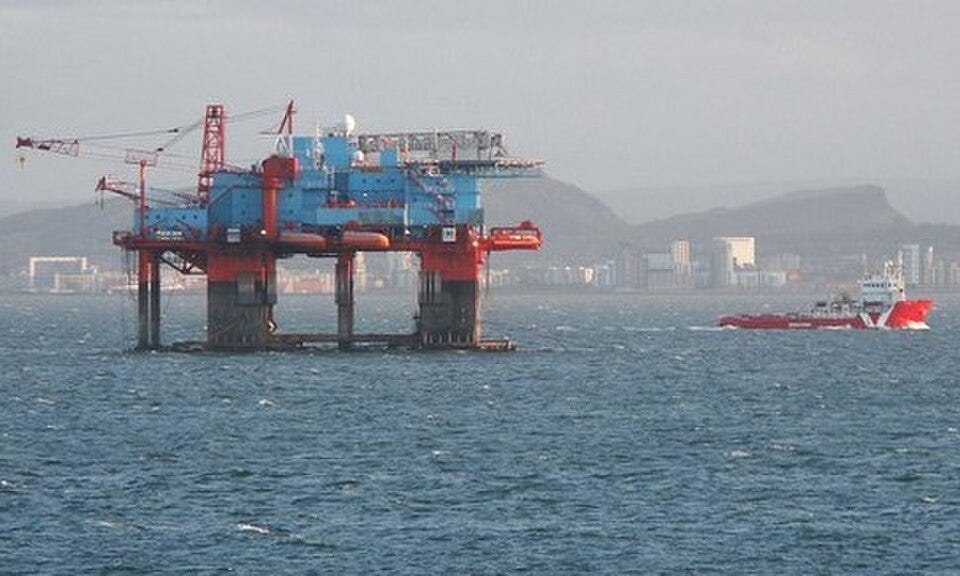
The Strait of Hormuz has long been the world’s most important energy chokepoint. Roughly one-fifth of global oil trade passes through this narrow corridor between Iran and Oman. When tensions rise—whether through conflict, sabotage, or naval escalation—markets react instantly.
But something important has changed in the structure of global oil supply. The world is still exposed to the Hormuz risk, but it is no longer structurally dependent on it as it once was.
That shift is being driven not by the Middle East, but by a new set of producers in the Atlantic Basin: Brazil, Guyana, Argentina, the United States, Canada, and parts of West Africa.
The Key Misunderstanding: Replacement vs Flexibility
A common analytical mistake is to assume that non-Middle East producers must “replace” lost Gulf barrels in a crisis.
They cannot.
If 10–15 million barrels per day were disrupted from the Strait of Hormuz, no combination of Brazil, Guyana, or Argentina could fully offset that in the short term.
But this misses the real point.
The modern oil system does not require perfect substitution. It requires redundancy, spare capacity, and logistical rerouting capacity.
That is where the Atlantic Basin has become structurally important.
Brazil: The Offshore Anchor
Brazil is now producing around 4 million barrels per day, driven by deepwater pre-salt developments operated largely offshore. These projects are capital-intensive but politically stable and export-oriented.
Crucially, Brazil’s production growth is steady rather than volatile, making it one of the most reliable incremental suppliers globally.
Guyana: The Fastest Supply Shock Absorber in the World
Guyana is the most dramatic case study in modern oil development.
From essentially zero production in 2019, it has rapidly scaled to nearly a million barrels per day through ExxonMobil-led offshore developments in the Stabroek Block.
This matters in a crisis scenario because Guyana’s output is:
Light crude (highly desirable in tight markets)
Export-oriented
Located entirely outside chokepoint transit routes
It is one of the few genuinely “new” sources of global supply in the 2020s.
Argentina: The Emerging Shale Export State
Argentina’s Vaca Muerta formation is one of the largest shale resources outside North America.
Production is approaching 800,000–900,000 barrels per day, with strong growth potential if infrastructure constraints are resolved.
Unlike Brazil or Guyana, Argentina’s trajectory depends heavily on domestic economic stability and pipeline expansion—but the resource base is large enough to matter globally.
The African OPEC Layer
Alongside Latin America, African producers such as Nigeria, Libya, and Algeria provide additional supply flexibility.
These countries are not new entrants, but they are strategically important because they are:
Outside the Strait of Hormuz
Closely linked to European demand
Capable of marginal output increases under price pressure
The Structural Shift
The deeper story is not any single country.
It is that incremental global supply growth is increasingly coming from outside the Middle East.
In previous decades, marginal barrels came primarily from OPEC Gulf producers.
Today, they come from:
Atlantic offshore basins (Brazil, Guyana)
North American shale (United States, Canada)
South American shale (Argentina)
Select African producers
This creates a more distributed energy system.
What This Means During a Hormuz Disruption
In the event of a major Strait of Hormuz crisis:
Gulf producers still dominate global supply
Price spikes would still be severe
Strategic reserves would still be critical
But the difference today is that:
More barrels are available outside the conflict zone
More trade routes remain unaffected
More production growth is still coming online, even during crises
This reduces systemic fragility at the margin.
And in energy markets, marginal barrels set prices.
Conclusion: A Less Centralised Oil World
The global oil system has not decoupled from the Middle East—but it has partially decentralised.
The Strait of Hormuz remains a critical chokepoint. But the world’s ability to absorb shocks is no longer concentrated in one geography.
Instead, resilience is increasingly coming from a wide arc stretching across:
Brazil → Guyana → Argentina → North America → West Africa
That shift does not eliminate energy crises.
But it changes their shape.
And that is a structural transformation worth paying attention to.