
On the Brink
Will the United States Cross the Ground War Threshold with Iran?

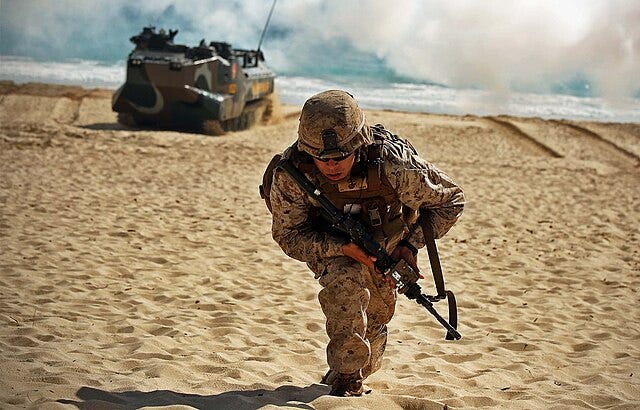
This weekend may mark a pivotal moment in the Iran War.
The military indicators are increasingly difficult to ignore. One Marine Expeditionary Unit (USS Tripoli) is almost in position. Another (USS Boxer) is en route. Elements of the 82nd Airborne Division are being mobilised.
These are not symbolic deployments—they are capabilities designed for rapid, decisive action.
If the United States chooses to initiate ground operations, the most likely opening targets are not deep into Iran, but rather its strategically positioned island holdings: Abu Musa and the Greater and Lesser Tunb islands.
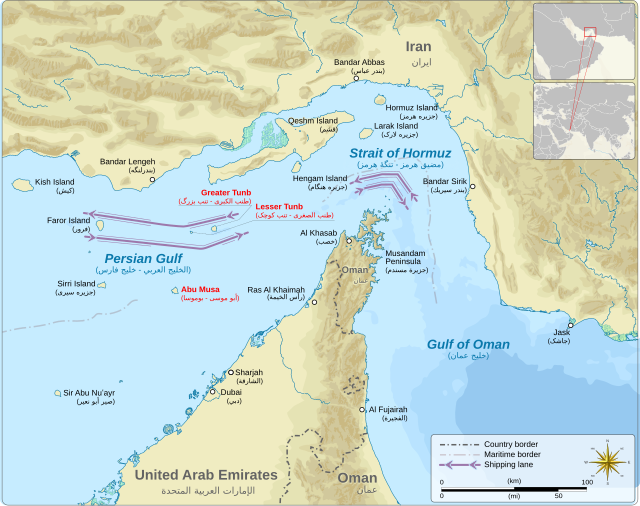
These islands sit astride one of the world’s most critical maritime chokepoints—the Strait of Hormuz.
A swift seizure would offer Washington a tactical and symbolic victory: demonstrating resolve, securing a key geographic advantage, and doing so with a relatively limited footprint and reduced risk of casualties.
But this would only be the beginning.
More ambitious operations—occupying Kharg Island or Qeshm Island—would significantly raise the stakes.
Kharg Island, in particular, is central to Iran’s oil export capacity. Any attempt to seize or neutralise it would likely be met with fierce resistance. Casualties would no longer be a risk—they would be an expectation.
Then there is the most dangerous scenario of all: a direct airborne insertion into mainland Iran. Locations such as Isfahan, long associated with Iran’s nuclear infrastructure, could become targets in a high-risk mission to locate and secure enriched uranium stockpiles.
Such an operation would depend on near-perfect intelligence. Without it, the risks multiply rapidly—not just operationally, but strategically. A failed or protracted mission inside Iran could trigger a broader regional war.
And this is where diplomacy—or the lack of it—becomes critical.
At present, negotiations appear stalled. Both Washington and Tehran are entrenched in maximalist positions, leaving little room for compromise. The diplomatic track, at least in the short term, seems unlikely to produce a breakthrough.
Adding further urgency is the reported U.S. timeline tied to potential strikes on Iran’s civilian power infrastructure. If these strikes are carried out, retaliation is almost certain. Iran’s most immediate and effective response would likely target the energy and infrastructure systems of the Arab Gulf states, or their desalination plants.
In other words, escalation would not remain confined.
What we are witnessing is a narrowing set of options, each more dangerous than the last.
The coming days will reveal whether this war stabilises—or whether it enters a new, far more volatile phase. But with Israel launching operations against Iranian proxy, Hezbollah, in southern Lebanon, perhaps the prelude to an Israeli invasion and occupation there, things aren’t looking good for any cessation of hostilities.
I don't care for the Iranian regime. I care for my daughter, grandson, and all the children of the world. I hate that Mr Netanyahu started this and had no plans other than obvious HATRED for gentiles, probably for anyone who would prevent him being judged for his crimes. I care for all the kids of the world - including those of Jews, Arabs and other infidels. I recognise that Iran has an extremist government that should not exist.
I hate that Mr Trump sacked too many senior officers leading to an inexperienced military without adequate plans.
I'm an optimistic, but I'm now scared on behalf of the children.
The U.S. putting boots on the ground in Iran is a constant danger. Such an outcome would result in a mixture of the Italian campaign and Gallipoli. Moreover, the U.S. limited industrial base couldn't produce enough supplies to support its bogged-down troops.