
Trump’s Middle Power Problem

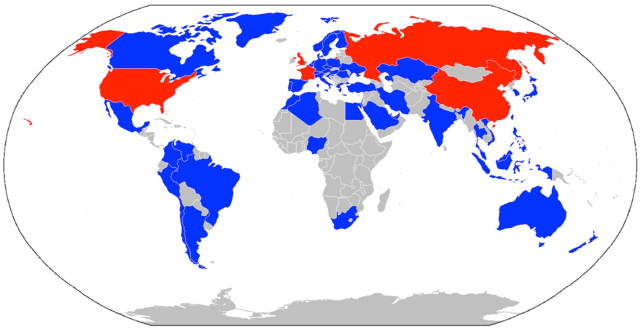
Donald Trump, his advisers, and much of the MAGA foreign-policy ecosystem operate from a simple premise: American power is overwhelming. The United States has the largest economy, the most technologically advanced military, and a global network of alliances no other country can match. From this perspective, resistance abroad looks irrational—and defiance looks suicidal.
This worldview would have made perfect sense in the 19th century.
But it is dangerously out of date.
The Myth of Imperial Power
European empires did not conquer the world because they were simply “stronger.” They conquered because they encountered societies that were separated from them by enormous gaps in technology, organisation, and disease resistance.
When Spanish conquistadors arrived in the Americas, they did not just bring guns. They brought steel, horses, writing systems, state administration, and pathogens that wiped out entire populations. The power gap was so extreme that conquest unfolded not as war, but as collapse.
The same was true in Africa, South Asia, and much of Southeast Asia. Imperialism succeeded because it operated across civilisational gradients.
That gradient no longer exists.
A Flattened World
The modern international system remains hierarchical—but it has flattened dramatically. Literacy, industrial capacity, engineering, and military professionalism are now widely distributed. Satellite imagery, precision guidance, cyber warfare, drones, ballistic missiles, and encrypted communications are no longer the exclusive domain of superpowers.
This means something critical:
Weak states can now impose high costs on strong ones.
Iran does not need aircraft carriers to challenge the U.S. in the Gulf.
Ukraine does not need global power projection to bleed Russia.
Houthis do not need a navy to disrupt global trade.
This is the new strategic environment—and it is dominated not by superpowers, but by middle powers.
The Rise of the Middle Powers
Middle powers—states like India, Turkey, Brazil, Saudi Arabia, Indonesia, Vietnam, and Iran—are not strong enough to dominate the system, but they are strong enough to resist domination.
They have:
Large populations
Industrial bases
Technological depth
Professional militaries
Regional influence
Most importantly, they have choice.
They can align with the U.S., hedge with China, trade with Europe, and cooperate with Russia—all at once. They are not vassals. They are brokers.
This is why Trump’s instinctive demand for loyalty keeps failing. These states do not want to overthrow the United States—but neither will they obey it.
Venezuela and the Imperial Hangover
The capture of Nicolás Maduro may give Trump the impression that old-style imperialism is back. But Venezuela will not become a U.S. protectorate. Post-Maduro politics will be shaped by:
Residual Bolivarian nationalism
Anti-American resentment
Fear of foreign domination
Venezuela’s next government will need U.S. money—but it will not surrender sovereignty. Like many former colonies, it will play Washington against Beijing, Moscow, and regional powers.
That is the middle-power instinct.
Trump’s Strategic Blind Spot
Trump sees power as domination.
Middle powers see power as leverage.
This is the core mismatch. The world is no longer made up of conquerors and conquered. It is made up of players—some bigger than others—but all capable of spoiling, resisting, and extracting concessions.
The United States is still first among equals.
But it is no longer alone at the top.
And the more Washington forgets this, the more it will be reminded.
📚 References & Further Reading
These are useful for readers who want to go deeper into the ideas behind the piece:
Paul Kennedy, The Rise and Fall of the Great Powers
— Classic analysis of how economic and technological diffusion undermines empires.Fareed Zakaria, The Post-American World
— Explains how rising middle powers constrain U.S. dominance without replacing it.Robert Gilpin, War and Change in World Politics
— On how power shifts occur in international systems.John Mearsheimer, The Tragedy of Great Power Politics
— Useful for understanding why great powers overestimate their ability to coerce.Michael Beckley, “The Power of Nations” (Foreign Affairs)
— Shows how economic and technological development is spreading globally.Hal Brands, The Twilight Struggle
— On how smaller states exploit great-power rivalry.Barry Posen, Restraint
— Argues the U.S. overestimates how much control it really has over the world.