
NATO
An Alliance at War with Its Own Future

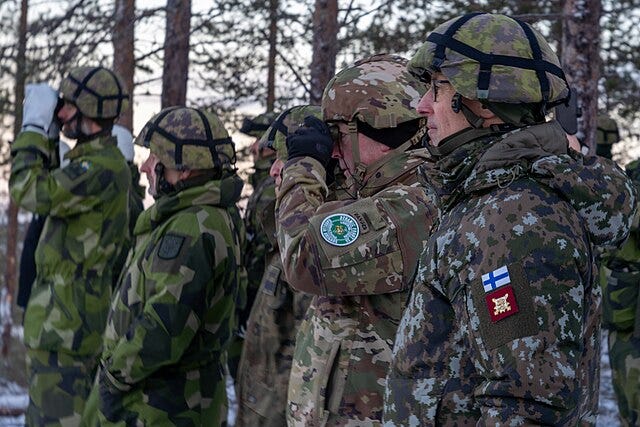
For the first time since its creation in 1949, NATO is not primarily threatened by Russia.
It is being destabilised by the United States.
That is a radical statement — but in early 2026, it is no longer an implausible one.
To understand why, we must first return to why NATO existed at all.
Why NATO Was Born
NATO was created in the aftermath of World War II to solve a brutal strategic problem: how to prevent the Soviet Union from conquering Western Europe without permanently stationing millions of American troops on the continent. The solution was collective defence. If any NATO member were attacked, the United States would treat it as an attack on itself.
This was not just a military promise — it was a political one. It told Moscow that war in Europe meant war with Washington.
For four decades, that promise kept the peace.
After the Soviet Collapse
When the USSR collapsed in 1991, NATO lost its original enemy. At the same time, Europe demobilised. Defence budgets were slashed. Armies shrank. The EU expanded. Trade replaced tanks as the organising principle of security.
The theory was simple: globalisation would make war irrational. States that were deeply economically interdependent would not fight one another. Liberal multilateralism would replace balance-of-power politics.
Russia, in the 1990s, was weak, chaotic, and broken. It was not a threat.
Then came Vladimir Putin.
Russia’s Return and NATO’s Expansion
Putin did not see the post-Cold War order as a victory for peace. He saw it as a humiliation. NATO’s ‘expansion’ into Eastern Europe — Poland, the Baltics, the former Warsaw Pact — was interpreted in Moscow not as defensive, but as encroachment.
But for those countries, NATO was not about containing Russia. It was about surviving it. Their history with Moscow told them something the West had forgotten: Russia does not respect weakness.
They joined NATO because they believed only one thing truly kept them safe — American power.
Trump and the Fracturing of the Alliance
Trump’s first term cracked that assumption. His message was blunt: Europe was freeloading. The U.S. was paying for everyone else’s security. NATO, he implied, was a bad deal.
There was truth in the complaint — but Trump turned burden-sharing into something more corrosive: conditional protection.
Then Trump returned.
By 2025, Washington’s posture toward NATO had changed dramatically. His administration openly favoured Russia’s position in Ukraine. His Vice President attacked European democracies at the 2025 Munich Security Conference. And the 2025 U.S. National Security Strategy declared that Europe — not Russia — was the primary strategic problem.
That was a revolution in American foreign policy.
Greenland: The Breaking Point
Then came Greenland.
When Trump openly declared that the United States was prepared to seize Danish territory by force, something fundamental snapped. Denmark is a NATO member. Threatening Denmark means threatening NATO itself.
Article 5 cannot survive that.
Once the U.S. signals that it may attack an ally, the alliance ceases to exist as a security guarantee. It becomes a shell.
The Choice Europe Now Faces
Europe is now confronting a terrifying question: what if America no longer sees European security as its interest?
NATO was never just a treaty. It was an act of faith — that the U.S. would always show up. That belief kept the peace for 75 years.
If it collapses, Europe will rearm. Nuclear proliferation will follow. Old rivalries will return. And Russia will test the gaps.
History is not ending. It is reloading.
NATO’s greatest danger today is not Moscow.
It is Washington.
Endnotes
NATO was founded in 1949 by 12 countries as a collective defence alliance against Soviet expansion in Europe.
The Warsaw Pact was the Soviet-led military alliance formed in 1955 to counter NATO.
After 1991, most European NATO members drastically cut defence spending under the assumption of a permanent peace dividend.
Vladimir Putin became President of Russia in 2000 and has consistently framed NATO expansion as a strategic threat.
Eastern European states joined NATO primarily to gain Article 5 protection against possible Russian coercion.
Trump’s first presidency (2017–2021) was marked by repeated public attacks on NATO burden-sharing.
The Munich Security Conference is the world’s premier forum on international security policy.
The U.S. National Security Strategy articulates the U.S. view of global threats and priorities.
Greenland is an autonomous territory of Denmark and therefore falls under NATO’s security umbrella.
Article 5 of the NATO treaty states that an attack on one member is an attack on all.
NATO weakened from within by the US plays directly into Putins sticky pudgy fingers. Is this the underlying end game? US in in decline and wants to endure by being the top dog in its own hemisphere. With the US holding all the technology cards, despite NATO and other partners contributing to it on US terms, the EU currently does not have the capability of limiting Russian, or China's aggression. Middle powers have slightly more economic influence than the majority of other nation states but as their manufacturing bases have been eroded over recent decades, in a China, Russia, US divide up, that influence is limited. Even if/when the eventual hemispherical carve up occurs, and the EU wins out over Russia, would the EU itself survive the cultural divisions or quickly slide into chaos. Would the European heritage within the US insist they protect Europe from China? And what part will India play?
Where does that leave your country?